Simple Texts For Expanding
I've noticed my fifth graders enjoy listening to simple picture books and then rewriting single pages by adding thought shots, dialogue, and action. The books provide the main idea and the students then provide the specific details that are missing in the book.
For instance, after reading No, David by David Shannon, students might choose to describe David's actions, thoughts, and dialogue with his mother as he tries to steal a cookie from the cookie jar.
I've found the following books or series of books are easy to adapt to this type of writing.
No, David and related books by David Shannon
Dinosaur Vs. Bedtime and related books by Bob Shea
Little Critter series by Mercer Mayer
Diary of a Worm and related books by Doreen Cronin
Cornelius P. Mud, Are You Ready For Bed? and related books by Barney Saltzberg
Good Night, Monkey Boy by Jarrett J. Krosoczka
Showing posts with label Ideas. Show all posts
Showing posts with label Ideas. Show all posts
Sunday, February 17, 2013


Saturday, October 13, 2012
Marshfield Dreams
by Ralph Fletcher
In Marshfield Dreams, Fletcher describes his early years growing up in a large family in Marshfield. This book a similar feel to Fletcher's Fig Pudding, but this book is a memoir and not a work of fiction.
If you working on personal narrative or memoir with your studtents this book is awesome. It is filled with stories that demonstrate the keys aspects of the idea trait: exploded moments, precise details, dialogue, and thought shots. It covers every other trait as well, but I'm currently focusing on ideas in my classroom, so that's what I noticed.
You could choose to read the entire book to your class or just pick and choose a few stories. The book does blend together as a whole, but the majority of the stories could stand alone also.
The Woods
by Paul Hoppe
In The Woods, a young boy sets out to find his lost stuffed rabbit before going to bed. On his quest, he imagines he is in the woods and encounters many scary monsters. To defeat the monsters, he does nice things, and by the end he has his stuffed rabbit and a few other stuffies to snuggle with.
I see using this book for copycat writing. Students could follow the organizational structure of searching for a lost item, running into obstacles, and overcoming them. The obstacles wouldn't need to be monsters, and the solutions wouldn't need to be solved with kindness. If you assign this copycat write, students could choose to follow the exact format or invent their own. It could be realistic or fantasy based. This book could be used a lot of ways.
Published: 2011
Sunday, October 7, 2012
Fig Pudding
by Ralph Fletcher
In this work of fictional personal narratives, 11 year old Cliff covers all of the emotions from laughter, tears, shame, and joy. These stories can be used to teach the ideas trait in writing, especially for expanding details. Examples of exploded moments, precise details, dialogue, and thought shots are found throughout the book.
Monday, January 2, 2012
Me Too! and The Escape of Marvin the Ape Writing Lessons
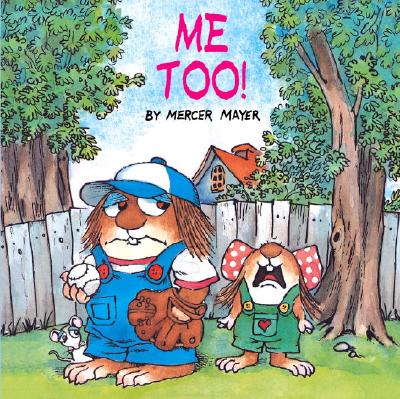
 These lessons are exactly like my No David Writing Lesson that I wrote about early. Both Me Too! by Mercer Mayer and The Escape of Marvin the Ape by Caralyn and Mark Buehner are cute picture books that contain a lot of little events but very little detail about each event.
After reading either book, you could ask children to choose one event from either story and then revise what was in the book by adding more detail. Students could explode the moments, add dialogue, or add thought shots. (I wish I could give proper credit for those revision ideas but I don't remember which teaching book I read them in. I would guess Ralph Fletcher. He's awesome!)
This kind of activity makes for a nice prompt write because it provides students with a variety of main ideas to choose from instead of just one topic. Also, students don't have to come up with the seed idea (Lucy Calkins), they just need to fill in all the details.
There are a ton of books that can be used in this manner. All of the No, David books are possibilities and a lot of Mercer Meyer's Little Critter books would work too.
Saturday, November 26, 2011
Live Writing by Ralph Fletcher
 Live Writing
by Ralph Fletcher
I read Live Writing about five years ago and didn't get much out of it. I must not have been ready for what the book had to offer because I just reread it and found so much useful information. In the book, Ralph Fletcher actually mentions that you should reread the book over and over. I probably laughed the first time I read that passage, but now I totally agree. When I read it again, that's when, not if, I know I'll pick up new ideas to improve my writing instruction
I'm not sure if this book is written for students or for teachers. Either way, it will help all of us become better narrative, personal or fiction, and poetry writers. While it never mentions the 6 Traits, it covers all of them. It hits ideas and organization in multiple chapters. It covers voice, word choice and sentence fluency in individual chapters.
Live Writing doesn't contain any mini-lessons but as you read it, mini-lessons pop out at you. "Leads: Breaking the Ice" inspired me to come up with three solid lessons on leads. "The End: Getting the Last Word" helped me figure out what I need to teach about endings. Finally, "Conflict: Here Comes Trouble" showed me what I needed to show my students about problems in narrative stories.
Please read this book if you haven't read it before. If you were like me, and read it a while ago, read it again. First time and repeat readers are bound to gain insight into their writing instruction.
Published: 1999
Location: Amazon
Sunday, November 13, 2011
No, David! Writing Lesson
 No, David!
by David Shannon
I was in Borders
Books in downtown Ann Arbor the first time I saw No, David! I picked it
up, skimmed through it, gazing at the pictures and not reading the words, and
thought, "This book sucks."
A year or two
later, I saw it again, picked it up, read the words, and fell in love.
I've now read this book to 13 straight classes ranging from Kindergarten
to Fifth Grade. It is a wonderful book that shows that people can be
forgiven even if they do a bunch of dumb stuff.
I just discovered
that this book is great for teaching students how to revise for ideas too.
If you haven't read No,
David! before, David gets yelled at by his mother for a variety of
infractions. Each infraction is shown with a two page picture spread and
David's mom's words. Nothing else, so it is great for adding to.
I started my
lesson by telling the students that they would be revising part of a story for
ideas. We then discussed possible techniques to use for revision of
ideas, such as thought shots, adding dialogue, and exploding the moment.
Next I read them No, David! After that I
told them to listen to the story again and choose one moment to revise.
Upon completion of the second read, I asked students to write down three
word description of what moment they had decided to revise.
We reviewed the
possible revision techniques and students then began to write. I circled
around the room, reading over student shoulders, praising and encouraging
different revisions.
After 10 minutes
of writing, students shared with their partners, and then I drew sticks for
three students to share with the class.
We repeated the
lesson the next day, and students were begging to do it a third time but I had
a different lesson planned using a benchmark text from Using Benchmark Papers to Teach
Writing With the Traits. My guess is that we will come back to No, David! in the future.
Published: 1998
Subscribe to:
Posts (Atom)