Monday, January 2, 2012


Faithful Elephants

Faithful Elephants
by Yukio Tsuchiya
translated by Tomoko Tsuchiya Dykes
illustrated by Ted Lewin

Faithful Elephants is a fictional retelling of what happened at the Ueno Zoo in Tokyo during World War II. 

Today the Ueno Zoo is a wonderful zoo and it was a wonderful place before World War II as well.  But during World War II is was a very sad place.  As the Allied Forces bombed Tokyo more and more, the Japanese Armed Forces ordered that all large animals, that could be dangerous if they escaped, be killed. 

Faithful Elephants retells how difficult it was for the three elephants' caretakers to follow through with the army's orders.

This story is extremely sad and demonstrates some of the lesser known consequences of war.  

Students would find this story to be quite fascinating and I can see wonderful discussions about right and wrong happening during and after reading. 

After reading and discussing the story, students could be asked to write a summary and their opinion on whether killing the elephants was the correct thing to do.

Published in English: 1988

Genre: Historical Fiction Picture Book

Locations: School Library, and Amazon

Note: This book is considered fiction and non-fiction depending on which library you go to.  The Library of Congress considers it to be fiction.

Me Too! and The Escape of Marvin the Ape Writing Lessons

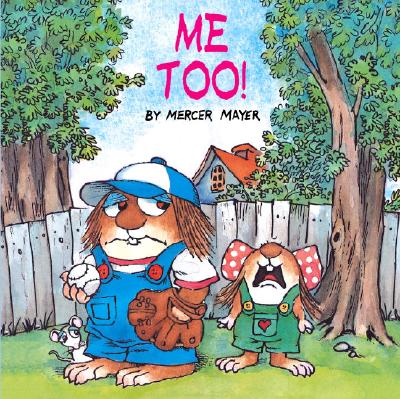
These lessons are exactly like my No David Writing Lesson that I wrote about early.  Both Me Too! by Mercer Mayer and The Escape of Marvin the Ape by Caralyn and Mark Buehner are cute picture books that contain a lot of little events but very little detail about each event.  


After reading either book, you could ask children to choose one event from either story and then revise what was in the book by adding more detail.  Students could explode the moments, add dialogue, or add thought shots.  (I wish I could give proper credit for those revision ideas but I don't remember which teaching book I read them in.  I would guess Ralph Fletcher.  He's awesome!)


This kind of activity makes for a nice prompt write because it provides students with a variety of main ideas to choose from instead of just one topic.  Also, students don't have to come up with the seed idea (Lucy Calkins), they just need to fill in all the details. 


There are a ton of books that can be used in this manner.  All of the No, David books are possibilities and a lot of Mercer Meyer's Little Critter books would work too.


Banish Boring Words

Banish Boring Words
Leilen Shelton


Leilen Shelton has created an awesome mini-thesaurus to use with your students.  Its 48 pages contain 26 different word choice lists, ranging from "Action Verbs" to "Sound" to "Easy/Hard" that you can refer to or refer to and photocopy to share with your students. 


I've used bits and pieces of the "Action Verbs" portion to discuss word choice with my students. I look forward to using more of the book in the upcoming weeks.


Word choice is a neat writing trait to teach because it helps students make their own writing more interesting but it also teaches them vocabulary words that help them better understand other writers' stories.


This book is well organized and easy to use.  I would recommend it.

Free Choice Language Arts Games

Instead of using Work Stations so I can run interventions with my fifth graders this year, I've come up with Free Choice Language Arts.  I'm still experimenting with it so I'm not going to go into detail about it now.  One of the free choices is Language Arts Games.  I've recently purchased three games that I want to briefly discuss.


  1. Tell Tale by Blue Orange:  This is a story telling game.  It comes in a circular metal tin and contains 60 double sided picture   cards.  The included directions explain 4 different games.  I'm going to summarize all 4 with one version.  You pass out some of the cards to each game participant and you use the pictures on the card to make up a story.  Students could just tell their stories orally or they could record them if they wished. 
  2. Spell It! by Blue Orange: This is a spelling game.  It comes in roundish metal tin and contains 5 dice with a different letter on each die (it does not contain the entire alphabet).  It also comes   with 28 scoring disks.  Students are asked to roll the five dice,   and then using at least three of the letters that turn up spell a word that is at least 4 letters long.  The first person to spell a word gets the points. Students can score points for words ranging from 4 - 10 letters.  Depending  on how you play the game, students may be asked to spell words that fit certain themes, or you could just spell anything.  Once again, the game does not require students to record anything but students could write the words down if they wished. 
  3. Rory's Story Cubes by Gamewright:  This is also a writing game.  The game comes in a sturdy box and contains 9 dice with a different picture on each side of each die.  There are no repeats.  Students roll the die and then use the pictures to create a story.  Students are not required to record their story but they can if they wish.  I've already used this game in my class.  Some students have rolled the dice and told stories to their partners.  Other pairs have rolled the dice and used them to create a picture book together.  I like the picture book ending the best but don't require it. 
In addition, Spot It! by Blue Orange is a cool matching game that I've played with my 4 year old son and 15 year old nephew.  There is also another version of Rory's Story Cubes called Rory's Story Cubes-Actions that I haven't ever seen in person.


Sunday, December 18, 2011

145th Street

145th Street: short stories
by Walter Dean Meyers


I loved Walter Dean Meyers novels when I was in junior high so I was very excited to see that he had a collection of short stories.  As a reader I enjoyed every story in the book, but as a fifth grade teacher I quickly noticed that not everyone was appropriate for fifth graders. They are just too intense. Most of the stories would be a better fit for middle or high school but there were three stories I could see reading to my students. 


In "Kitty and Mack: A Love Story," Kitty never gives up on Mack even after Mack gives up on himself.  Mack was a superstar athlete and Kitty was his smart girlfriend.  After Mack gets hurt, and his athletic career ends, he gives up on himself and on his relationship with Kitty.  Kitty doesn't and you won't believe how hard she tries to get Mack back on his feet.


Patrolman O'Brien, who lives in the pleasant suburbs, walks the beat in tough Harlem in the short story "A Christmas Story."  Despite his desire to keep his home life and work life separate he develops an unlikely friendship with Mother Fletcher.  When Mrs. O'Brien and her daughter find out that Mother Fletcher has invited them to Christmas dinner, they demand to go.  At the dinner, Patrolman O'Brien learns that Christmas is celebrated where he lives and where he works. 


In "Block Party-145th Street Style," everyone is supposed to be having a good time and enjoying free food.  Then Peaches gets into it with JT for being a trouble maker and he leaves without any food.  After cooling down, she decides to take some food up to him in his apartment.  What she discovers changes her opinion about JT and what she does will change your opinion of Peaches. 

American Tall Tales

American Tall Tales
by Adrien Stoutenburg
Illustrated by Richard M. Powers


My fifth graders really enjoy tall tales.  They enjoy the exaggerations and the adventures of the characters.  American Tall Tales is an excellent collection offering a variety of tall tales. 


Most of the tales start with the character's birth and end with their death.  Only two don't cover the full life span.  Paul Bunyan walks off into the sunset in his story while Joe Magarac shows up fully grown.


Paul Bunyan's, Pecos Bill's, Stormalong's, Mike Fink's and Joe Magarac's stories include lots of exaggerations.  Davy Crockett's tale also includes a lot of exaggerations but ties in real life events too.  Johnny Appleseed's and John Henry's stories include the least amount of exaggeration.


I had never read Stormalong before, but it reminded me of John Henry.  Both characters compete against more modern machines and die in the process of defeating them. 


The ending of the Mike Fink story was very dark.  Mike was killed by one of his friends after Mike had killed another one of their friends. 


I would also recommend The Bunyans by Audrey Wood.  It tells Paul Bunyan's tale after he gets married.  According to the book, Paul and his family are responsible for many of the natural wonders found in the United States.


Big Men, Big Country: A Collection of American Tall Tales by Paul Robert Walker and American Tall Tales by Mary Pope Osborne are excellent tall tale anthologies. 

Sunday, December 4, 2011

Science Fiction Short Stories

One of the genres that the state of Michigan recommends I teach my students is Science Fiction.  I know science fiction isn't for everyone and that it comes in a lot of forms, from super machines to dystopian futures, so I've decided to read a bunch of Science Fiction short stories instead of reading one Science Fiction chapter book to my class. So far I have found stories in the following two anthologies to use.  


Tomorrowland: Stories about the Future
Compiled by Michael Cart


"His Brother's Keeper"
by Gloria Skurzynski


Scientific advancements allow for groups of four to travel to Mars. The Holbrook family is the current group of four.  Their mission is to make Mars hospitable for humans. While working in Science Fiction elements the story mainly focuses on the relationship between genius brother Kern and happy go lucky brother Dylan. Everyone should be able to relate to the jealousies and annoyances that arise from being stuck on Mars with no other children to distract them.


"The Last Dog"  
by Katherine Peterson


Brock lives in a dome.  He has been told everything outside the dome is a wasteland and that nothing can survive out there.  He decides he wants to go out of the dome anyway.  Wearing protective gear he discovers the impossible, a living breathing puppy.  What will Brock do when he sees something that goes against everything he's been taught?


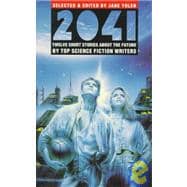
 2041
Selected and Edited by Jane Yolen


"Lose Now, Pay Later"
by Carol Farley


Trinja and Deb discover Swoodies, a free dessert, at the mall.  They fall in love with it and gain a lot of weight.  


Eventually, The Slimmer opens up in the mall parking lot.  For a fee, it instantly makes you lose weight.  Trinja and Deb have to decide if spending all of their money losing weight is worth eating all the free Swoodies they want.


"Moby James"
by Patricia A. McKillip


This story is about relating with your brother.  It just happens to take place in the future where all classes are taught by computers and students read reading disks on viewers instead of reading books.  


The two brothers, Rob and James share a bedroom.  James is annoyed with Rob.  Rob is mad at his brother.  Read "Moby James" to see if Moby Dick can help them work things out.


I would love to find more Science Fiction stories to share with my students.  I've read a bunch of good one but most aren't appropriate for fifth graders.  I would love to hear about any Science Fiction Short Stories that you could recommend to me.